








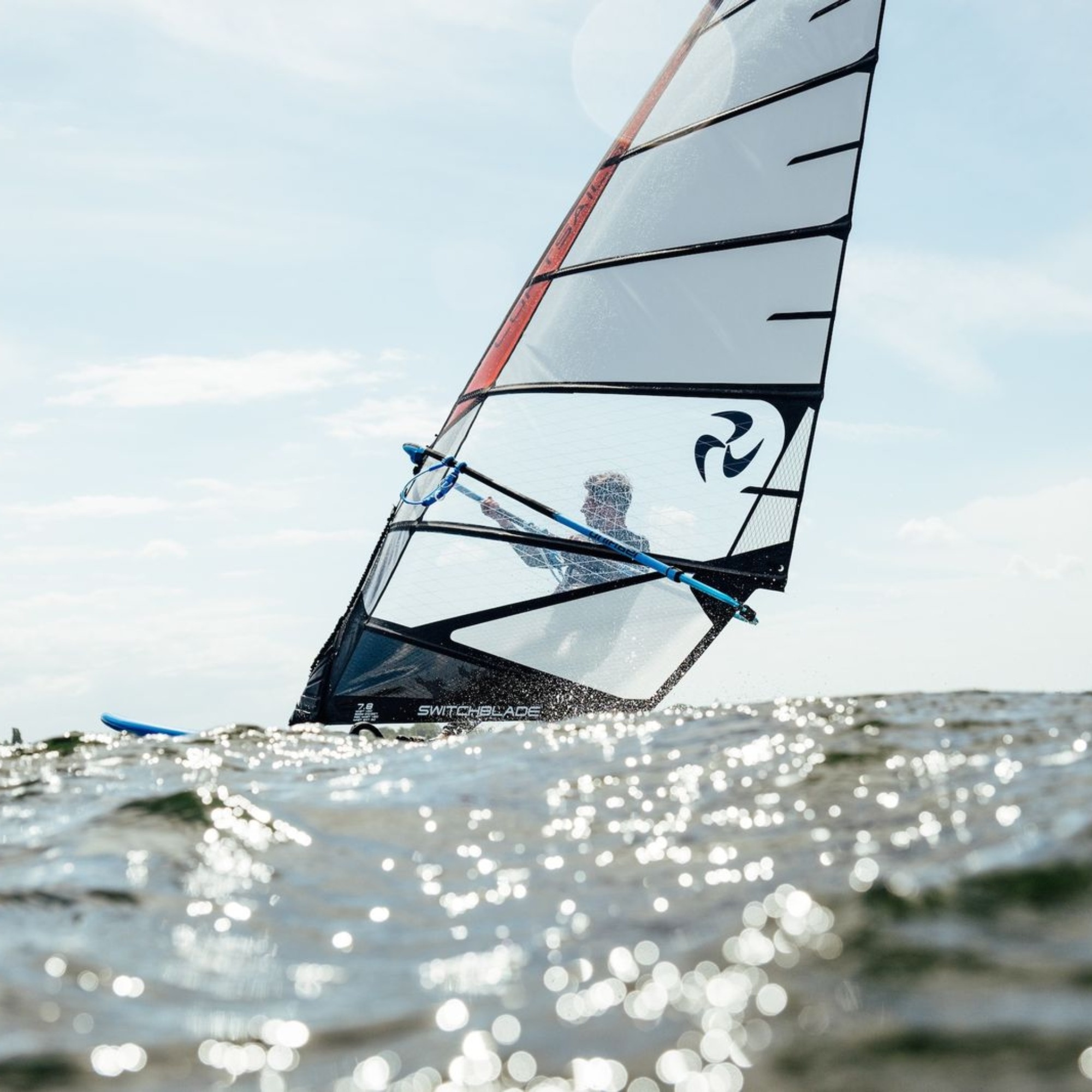

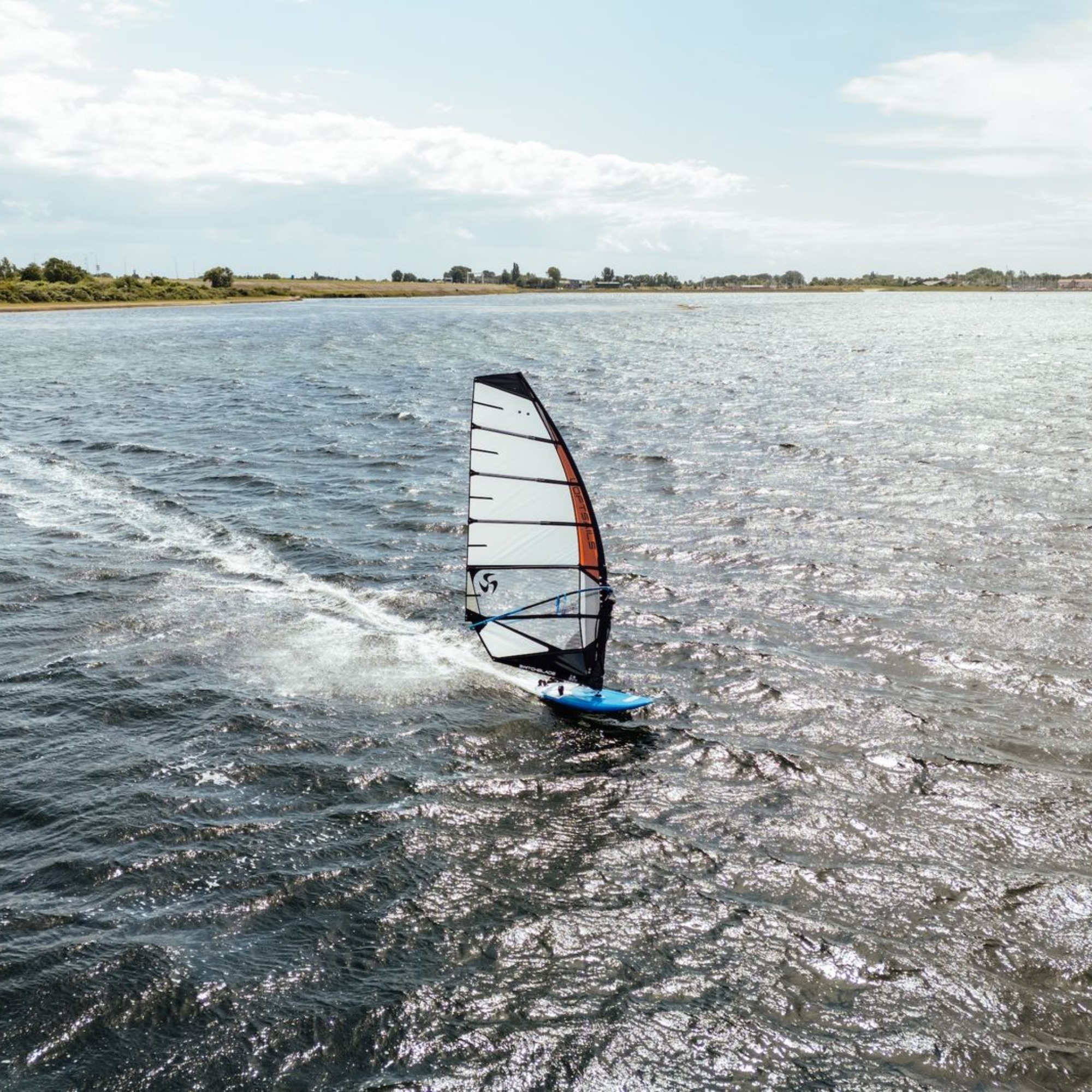


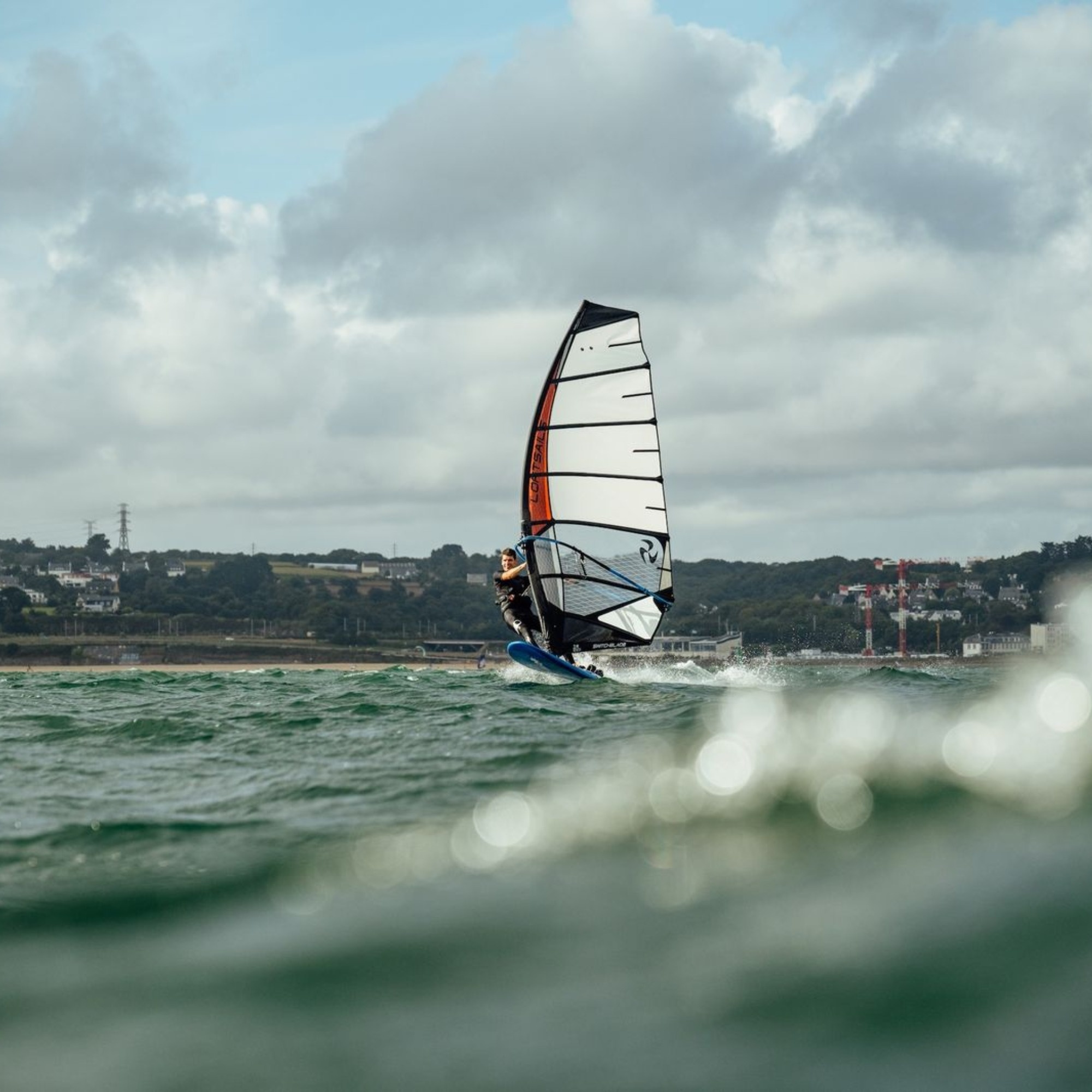


Race-inspired freerace performance
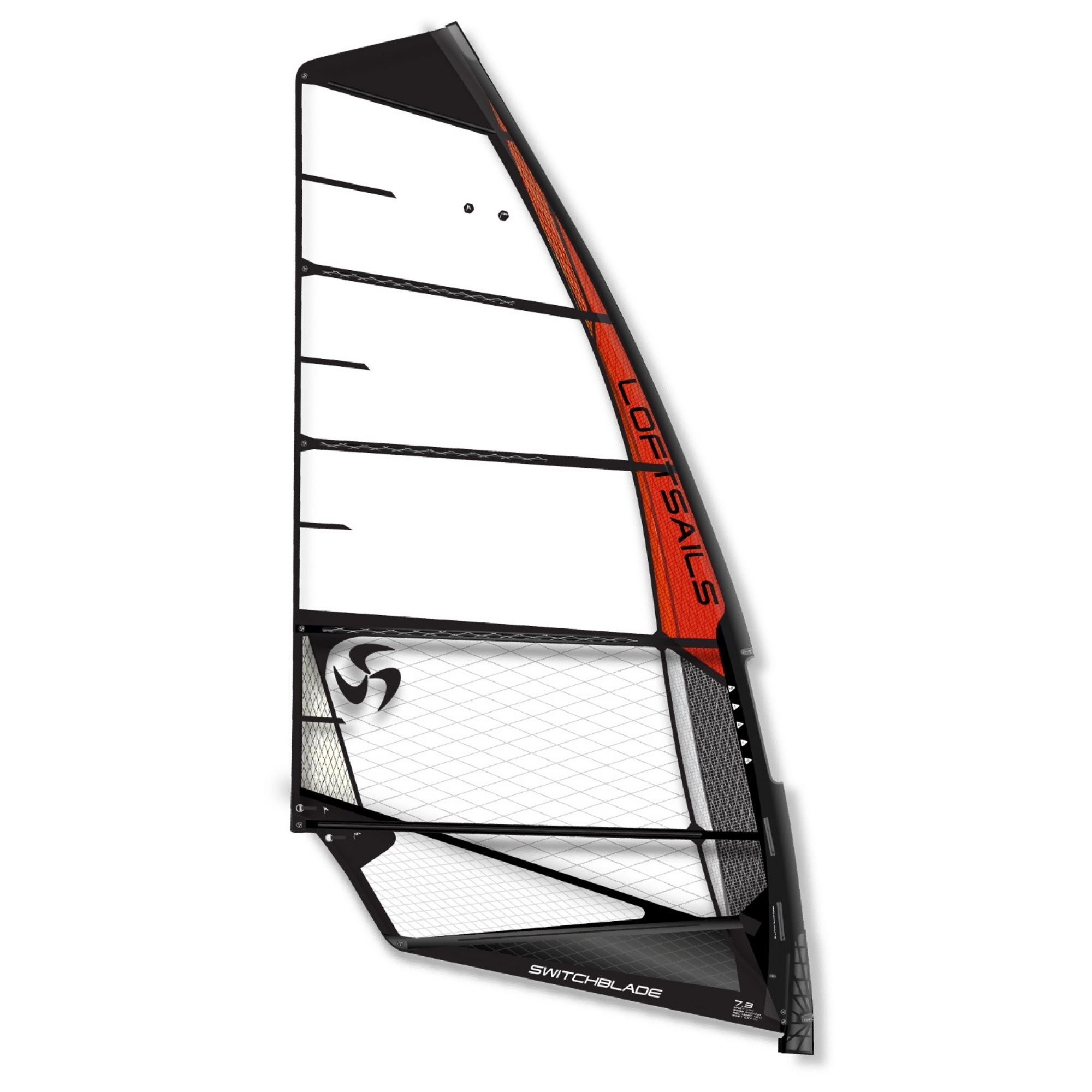
The Switchblade takes its design inspiration from the Racingblade, bringing race-derived performance into a more accessible three-cam construction. It is designed for windsurfers who want powerful acceleration, sustained speed and efficient forward drive without the additional complexity of a full slalom racing sail.
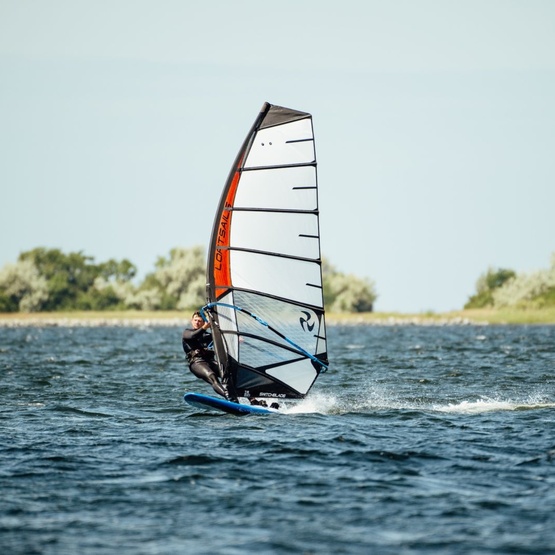
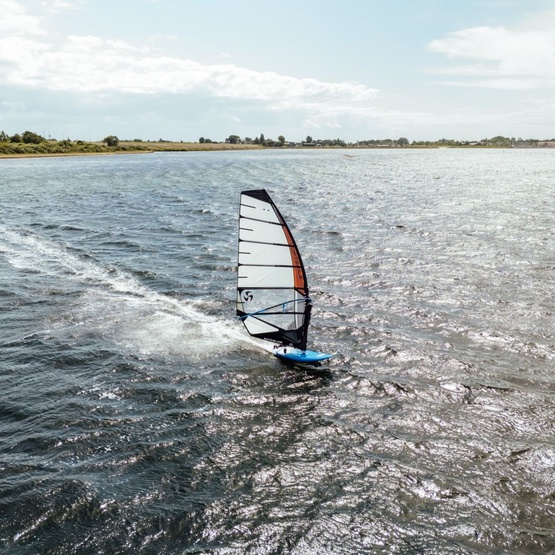
Three cambers help maintain a stable, deep profile, while the stiff batten framework limits deformation as wind pressure increases. The result is a locked-in feel during fast reaches across flat water and moderate chop, particularly in medium to strong winds.
Switchblade is aimed at intermediate to advanced sailors who are confident planing and want to develop their speed. Compared to the no-cam Oxygen, it requires more precise tuning but delivers a more stable profile and stronger forward drive when fully powered.
Updated geometry — improved balance and reduced swing weight
For 2026/27, the aspect ratio has been increased and boom lengths shortened. This reduces swing weight, making the rig feel more responsive through gybes and transitions, particularly in larger sizes.
Revised luff curves and re-oriented batten angles lower and centralise the sail's centre of effort. This helps maintain a balanced feel during acceleration and makes the power easier to control as wind strength increases.
A slightly lower foot profile adds drive when sheeted in, helping the Switchblade build speed smoothly without constant adjustments to the boom position.
Tubed Battens and Cross Batten — a stable profile at speed
The Tubed Batten System creates a stiff, responsive framework that helps the sail retain its designed profile under load. This reduces unwanted profile deformation as wind pressure and board speed increase.
An additional Cross Batten connects the boom area to the batten framework. Working with the extended leech and inset clew, it influences twist distribution and improves control towards the upper end of the wind range.
On the water, this translates into consistent forward drive during long, fast reaches, allowing the rider to concentrate on board trim, stance and maintaining efficient fin pressure.
TekCam 3 — lighter cambers and smoother rotation
The TekCam 3 system reduces camber weight while improving rotation around the mast. It works with the revised batten geometry to maintain the sail's profile and support smoother transitions from one tack to the other during gybes.
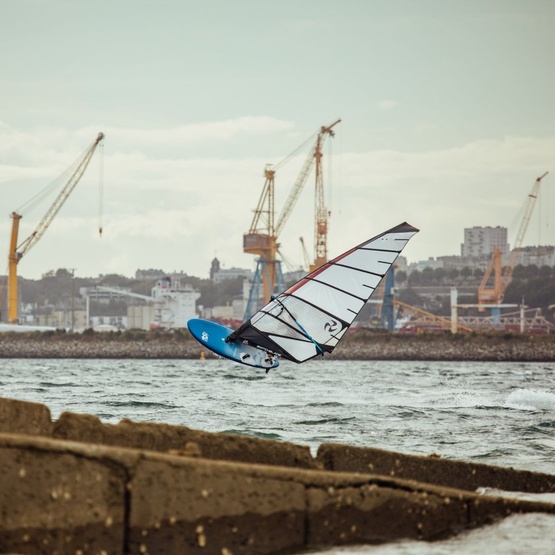
This is particularly valuable in a freerace sail, where high-speed stability must be balanced with predictable handling through manoeuvres.
Metallic cam interfaces help reduce wear at contact points, supporting smooth operation and long-term durability.
Dual clew eyelets — adjust power and leech twist
The Switchblade features two clew eyelets, allowing riders to fine-tune the sail's response to changing conditions.
The upper eyelet promotes a fuller profile and stronger drive, making it useful in lighter winds or when additional power is needed.
The lower eyelet encourages a flatter profile and greater leech release, improving control when the wind increases and the sail is fully powered.
This adjustment extends the sail's practical tuning range without requiring changes to the rest of the rig.
Blade Mast Pocket — refined profile stability
The updated camber geometry and batten angles required a slightly wider mast pocket for 2026/27. However, it remains narrower than the pockets typically found on full slalom sails, maintaining a balance between race-derived stability and freerace practicality.
The mast pocket side panels are made from lightweight 2 mil quad-axial laminate, replacing the woven materials used previously. This construction helps resist creasing during rigging and rolling while maintaining the pocket's geometry under load.
The Blade Mast Pocket design distributes downhaul tension between the mast panel and pocket, supporting a clean leading edge, stable sail profile and consistent cam rotation.
White or HD Blue — choosing the right construction
The Switchblade 2026/27 is available in two material constructions, both sharing the same shaping and intended handling characteristics.
White — Standard Bi-Ply / X-Ply Construction
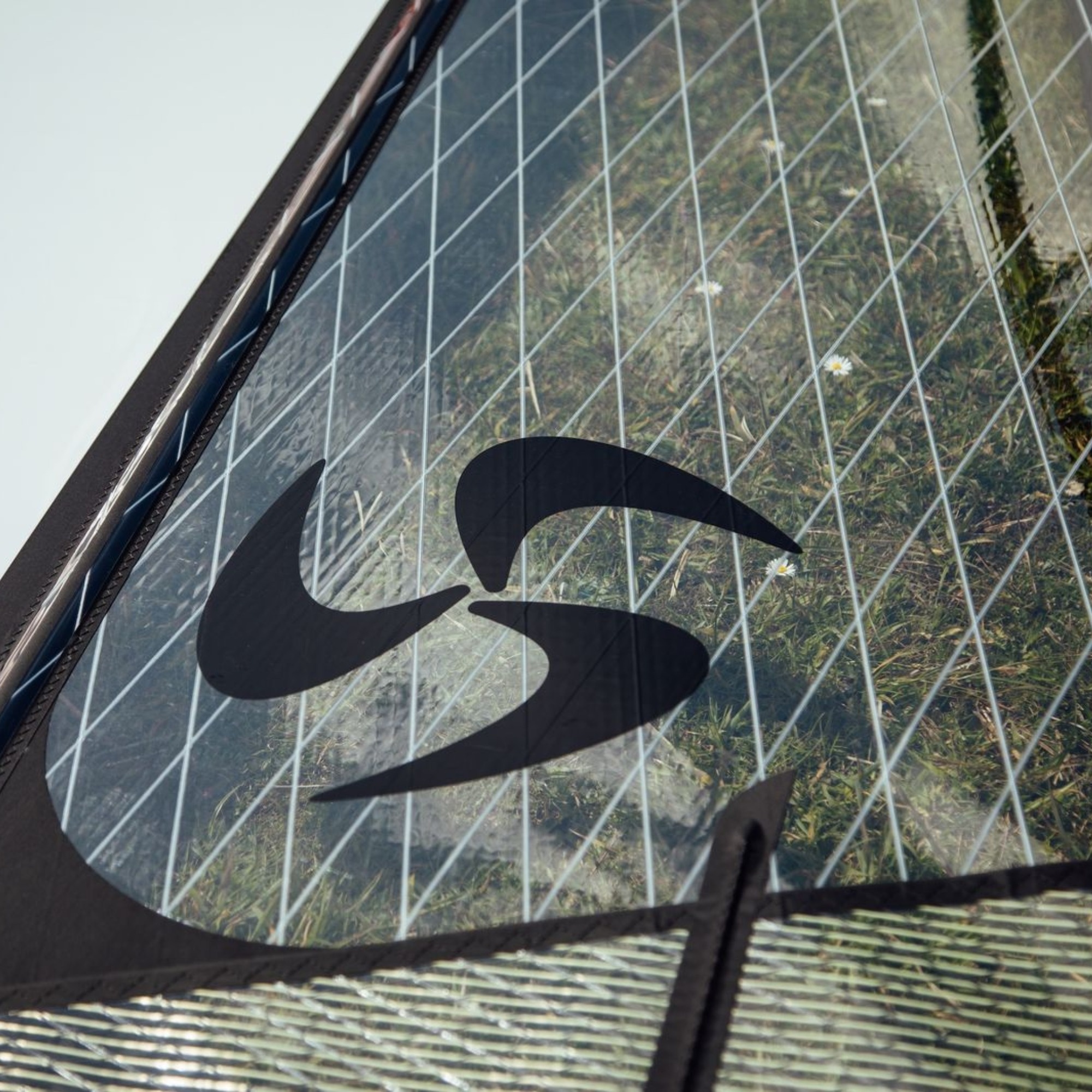
The standard version combines 5 mil foot panels, a 4 mil X-Ply central window and 4 mil Bi-Ply upper body panels. This construction provides a balance of structural support, weight and durability for regular freerace sailing.
HD Blue — Reinforced X-Ply Construction
The HD Blue version retains the 5 mil foot panels and 4 mil X-Ply window but uses 2 mil quad-axial laminate in the upper body. This material increases resistance to wear and damage without changing the sail's intended handling characteristics.
White is a practical choice for riders looking for a versatile freerace sail, while HD Blue is suited to those who sail frequently or place greater importance on durability.
Reinforced construction for long-term use
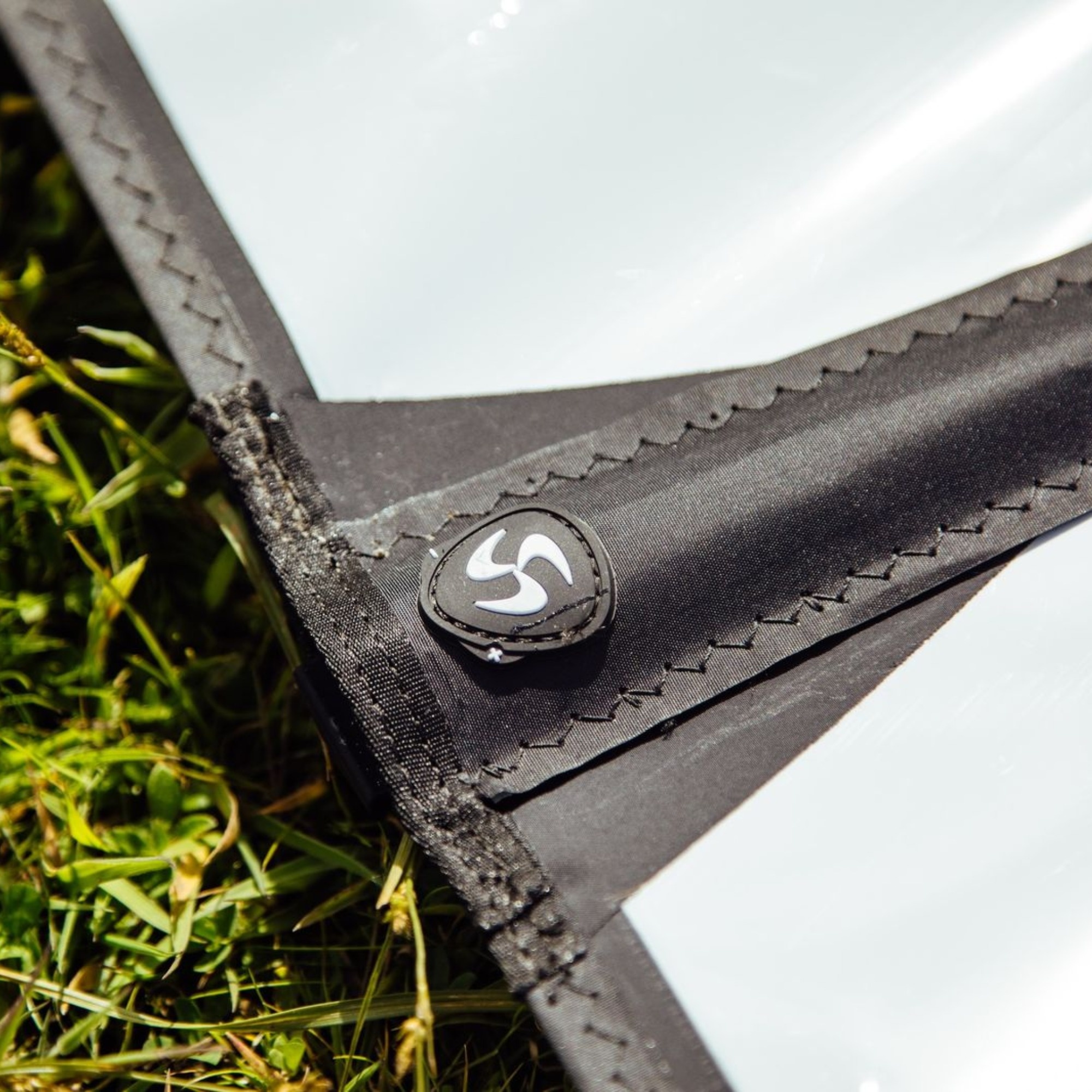
The lower panels use 5 mil laminate, while the clew area is reinforced with a Kevlar-reinforced panel extending up to the batten above the boom. This protects an area exposed to high loads and repeated creasing during use and storage.
A 50 mm triple-stitched mast sleeve seam is designed to withstand high downhaul tension over repeated rigging cycles. Internal Kevlar strips help stabilise the sail's structure, while double Dacron top panels improve durability and make rolling easier.
The revised panel layout also reduces unnecessary decorative cloth and scrim, keeping weight under control and improving the distribution of mass across the rig.
Sizes and recommended masts
The Switchblade 2026/27 is available in seven sizes: 5.3, 5.8, 6.3, 6.8, 7.3, 7.8 and 8.5 m².
Loftsails recommends Team Edition RDM masts for sizes 5.3–6.8 m² and Team Edition SDM masts for sizes 7.3–8.5 m².
Smaller sizes provide a more compact rig for stronger conditions, while larger sizes offer additional power for long, fast reaches. When choosing a size, consider rider weight, board width, fin size and the typical wind conditions at your local spot.
Features
- TekCam 3 - A lighter camber system improves profile rotation during gybes and supports consistent sail behaviour across different trim settings
- Tubed Batten System - Tubular battens increase structural stiffness, helping the sail maintain its profile and forward drive at high speeds
- Cross Batten - An additional batten working with the clew geometry improves twist control and stability in stronger winds
- Dual Clew Eyelets - Two outhaul attachment points allow riders to adjust the sail for stronger drive in lighter winds or greater power release in stronger conditions
- Blade Mast Pocket - A mast pocket featuring 2 mil quad-axial side panels helps preserve profile geometry and supports smooth cam rotation
- Metallic Cam Interfaces - Metal contact surfaces reduce wear between moving camber components, supporting long-term durability
- Kevlar-Reinforced Clew Panel - A reinforced panel protects the clew area and the section extending towards the batten above the boom from repeated loading and wear
- Kevlar Strips - Internal vertical and horizontal Kevlar reinforcements help maintain profile stability under load
- Double Dacron Top Panels - Double-layer Dacron construction in the head area improves durability and makes the sail easier to roll
- Trim Diamond - A visual reference marker helps achieve consistent downhaul settings and the desired leech release
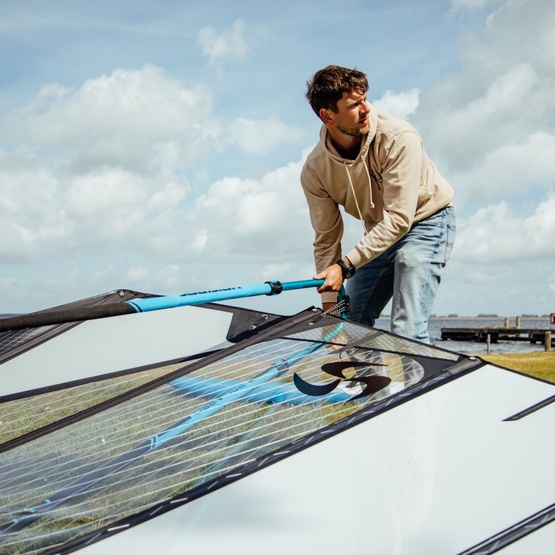
- Full-Opening Mast Pad - An opening mast base protector provides convenient access to the extension, downhaul system and batten tension adjustments
FAQ – Loftsails Switchblade 2026/27
What's new for 2026/27?
For 2026/27, Switchblade receives structural and balance-focused refinements to improve stability when sailed powered.
Updated shaping lowers the center of effort, while a redesigned mast pocket supports higher batten angles without adding weight. The new TekCam 3 system further improves rotation and handling consistency.
What conditions is the Switchblade designed for?
The Switchblade is designed for powered freerace sailing, where speed, stability, and efficiency matter more than early planing.
It performs best in medium to strong wind conditions on flat water or open-water chop, where sailors are sailing powered for extended periods. The sail is tuned to hold its shape and balance as pressure builds, making it well-suited to long, fast reaches and gusty race-style courses.
While it remains usable across a broad wind range, Switchblade is at its best when sailed powered rather than underpowered, rewarding committed sailing and precise trim.
What skill level is recommended for the Switchblade?
The Switchblade is best suited to experienced sailors who are comfortable sailing powered and tuning their equipment.
It rewards riders who understand trim adjustments, stance, and fin pressure, and who enjoy refining their setup to extract more speed and control. Compared to freeride sails, it asks for a more deliberate approach to rigging and sailing, but without the full sensitivity and complexity of a race sail.
Sailors progressing from freeride who are confident in stronger wind and interested in higher-speed sailing will find Switchblade a natural step forward.
What mast is recommended for the Switchblade 5.3 HD Blue 2026/27?
The recommended mast for the Switchblade 5.3 HD Blue 2026/27 is the Loftsails Team Edition RDM 400. Alternatively, you can also use the Loftsails Vision RDM 400.
What type of board can I use the Switchblade with?
The Switchblade pairs naturally with freerace and slalom boards in single-fin configurations.
It works particularly well on medium- to high-wind freerace boards and fin slalom boards, where its stability and forward drive can be fully utilized. The sail's balanced pull and locked-in feel support efficient fin pressure and high-speed sailing over open water and chop.
For freeride boards focused on early planing and ease, Oxygen is generally a better match, while for full race boards and competitive use, Racingblade is the more specialized choice.
What's the difference between Switchblade and Oxygen?
While both sails are designed for speed-oriented freeride sailing, they focus on different priorities.
Oxygen is a no-cam freeride sail built around early planing, simplicity, and smooth, efficient speed. It excels in lighter wind and relaxed freeride sailing, with a forgiving feel and easy rigging, while still delivering impressive top-end speed for a cam-free design.
Switchblade is a cammed freerace sail designed to be sailed powered. It delivers stronger forward drive, a more locked-in feel, and greater stability at higher speeds. It also offers more tuning range and rewards precise trim more clearly than Oxygen.
For instant answer - open the chat and ask your question. We're active 9.00-17.00 CET.
Is it afterhours? No problem - leave us a message and we’ll respond early the next day.
+48 61 641 70 22
For those who prefer phone calls - that's our number. You can give us a ring between 9.00-17.00 CET.




 Facebook
 Instagram
 YouTube

